Guide to Identifying Legit and Safe Casinos


Guide to Identifying Legit and Safe Casinos in the UK
The short answer. A legitimate UK casino holds a current UKGC licence, verifiable in under a minute on the public register. But the licence is the floor. What sits above it tells you far more, whether the operator has been fined, whether it repeated the same failing after being caught, and whether it has genuinely adopted the stronger player protections the UKGC has rolled out since 2025. A casino fined once and reformed is not the same risk as one fined twice for the same problem. This guide covers how to read both.
Most guides to identifying a safe casino stop at the UKGC licence. That is necessary but not sufficient. The public register also contains every regulatory action the UKGC has taken, the fines, the warnings, the licence conditions attached as a result. That enforcement record tells you something the licence number alone does not. It shows how a casino behaves under scrutiny and whether it actually changes when caught falling short. Since 2025 the UKGC has pushed through more genuine player protection reform than the previous decade put together, and most UK players have no idea how much of that applies directly to them.
What the enforcement record actually tells you
A fine is not automatically a red flag
The UKGC fined 13 operators between May and December 2025 alone. Some of those brands are casinos UK players use regularly. A fine does not mean the casino is unsafe to use today. It means the regulator caught a specific failing and forced a response. What matters for a player is what the failing was, whether it was serious (money laundering controls versus a technical labelling error), what the casino was required to change as a condition of settlement, and whether the same operator has been fined for the same type of problem before. One fine with confirmed remediation is a different risk to two fines for the same thing.
The repeat pattern is the genuine signal
The most useful thing to look for in the enforcement record is repetition. When the UKGC fines an operator and attaches a condition requiring a third-party audit, that audit is designed to confirm the changes were real. An operator that is subsequently fined again for the same category of failing has either not made the changes or made them superficially. That pattern, not the existence of a fine, is what a cautious player should weight. The UKGC has been increasingly explicit about this in its own published statements. Past warnings have expired. Repeat offenders face escalating consequences.
Notable enforcement actions and what changed as a result
ProgressPlay, August 2025
Fined £1m for AML and social responsibility failings during a licence review. The UKGC issued a warning and attached a condition requiring ProgressPlay to complete a third-party compliance audit within six months. This followed an earlier £170,000 fine in 2022 for similar failings, making it a repeat case. ProgressPlay operates several UK casino brands including JeffBet, Monster Casino, Betsuna and Betrino.
Required outcome: third-party audit of AML and SR controls within six months of review.
Spreadex, May 2025
Fined £2,022,000 for AML and social responsibility failings. The Commission issued a warning and required Spreadex to undergo a third-party audit. Spreadex operates a combined financial spread betting and online sports betting product, which creates unusual compliance complexity. The fine reflected failures in monitoring high-value customer accounts.
Required outcome: third-party audit and enhanced monitoring conditions attached to licence.
888 Casino, August 2025
Fined £33,075 for failing to link customer accounts correctly, a social responsibility requirement that ensures self-exclusion and monitoring apply across all accounts held by the same player. 888 self-identified the breach and cooperated fully, which the UKGC acknowledged in its decision. The smaller penalty reflects both the nature of the failing and the operator's conduct during the investigation.
Remediation: account-linking system updated. Self-identified breach, no audit condition attached.
How to look up any casino's enforcement history. Go to gamblingcommission.gov.uk, click Public Register, then Regulatory Actions. Search by operator name. Note that many casino brands are licensed under a parent company name, so if a footer licence number is listed, search that directly to find the operator behind the brand.
What the 2025 and 2026 rule changes mean for players
The changes that are already live
Most players either do not know about these changes or have been scared off by distorted versions of them. The payslip-demanding horror story around affordability checks is the obvious example. Below is what actually happened, with dates, so you can form your own view.
The affordability check fear versus the reality
The payslip-demanding horror story that circulated when affordability checks were announced has not materialised for the vast majority of players. The check at £150 net deposits uses background credit reference data, not document requests. According to UKGC pilot data, 97 percent of checks completed without any player interaction at all. The detailed check requiring documents applies only when specific markers of financial harm appear, and even then the casino is expected to use the least intrusive method available first. If you have no markers of financial distress, the check makes no practical difference to your session.
What the deposit limit labelling fix means in practice
Before June 2026, different UK casinos used deposit limit to mean different things. Some applied it to net deposits (deposits minus withdrawals), others to gross. A player who deposited £200 and withdrew £50 might think they had used £150 of a £200 weekly deposit limit, when actually they had used the full £200 on a gross basis. That confusion was not theoretical, it affected real spending decisions. The standardisation from June 2026 means that when you set a deposit limit at a UKGC-licensed casino, you now know exactly what it controls. A site still using the term loosely after that deadline has a compliance gap worth noting.
How to read a casino's record before you deposit
The three-minute check that most players skip
Before depositing at any UK casino you are not familiar with, three steps take about three minutes and tell you most of what matters. Go to gamblingcommission.gov.uk. In the public register, search the casino name or the operator name from the footer, and confirm the licence is active, not expired or suspended. Then go to Regulatory Actions in the same register and search the same operator name to see whether they appear. If they do, read the decision date and the nature of the breach. A single entry from years ago with a small penalty is low weight. A recent entry for AML failings, or more than one entry for the same type of failing, is worth taking seriously before you hand over payment details.
What to look for in terms and conditions
Two things in the bonus terms tell you more about a casino's fair-play culture than its headline offer. The maximum bet allowed while a bonus is active is one of them. The UKGC does not cap this figure, and a casino that sets it at £1 or below is making it nearly impossible to clear a bonus without accidentally breaching the terms and voiding your winnings. The other is any cap on winnings from bonus funds. A 1x conversion cap means your maximum withdrawable amount from a bonus equals your original deposit, regardless of what you actually won. Both of these sit in the terms and conditions. Most players read them only after something goes wrong.
The Trustpilot pattern check
Trustpilot scores for UK casinos cluster between 1.5 and 3.0, which sounds concerning until you realise that is the industry range. A score of 2.5 from 5,000 reviews is not alarming in isolation. What is worth reading is the pattern in 1-star reviews over the past three months. If the same complaint appears repeatedly, delayed withdrawal after a win, account closed without funds returned, documents requested repeatedly for the same KYC check, that pattern is data, not noise. Isolated complaints from people who lost are noise. The same complaint appearing repeatedly from different verified accounts is the signal worth taking seriously.
Three casinos that hold up under these checks
These three all hold current UKGC licences, have no repeat enforcement pattern for serious failings, and offer the full set of post-2025 player protection tools. Each has a named weakness.

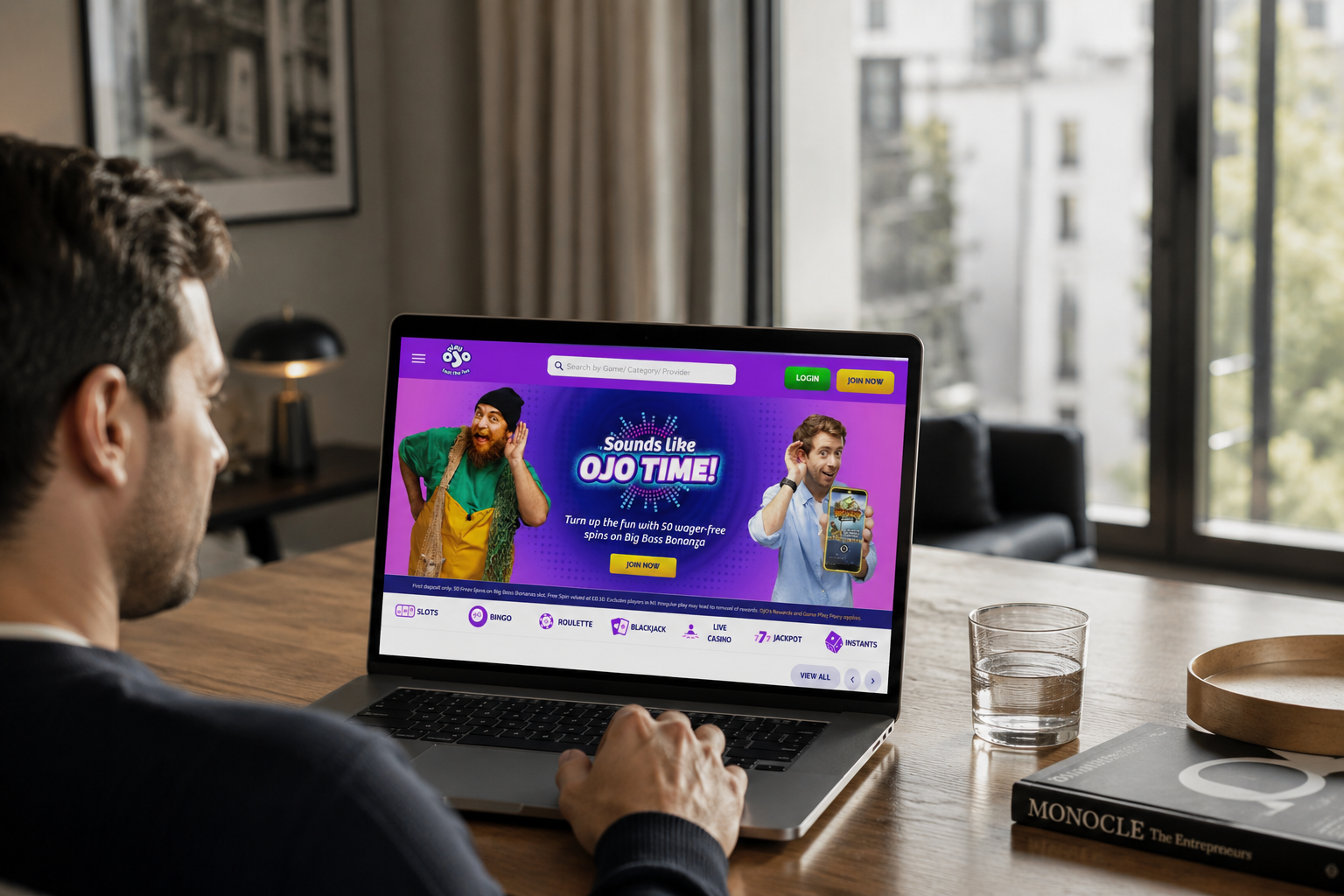
PlayOJO
No wagering on any bonus, the clearest fair-play signal available. OJOplus cashback on every bet with no conditions. Operator SkillOnNet has a enforcement history (£305,150 settlement in 2023), but PlayOJO itself has not been the subject of a repeat pattern. Watch-out is KYC speed, slower than most. Complete your verification before your first deposit.

Casumo
Established, UKGC-licensed, 3,500-plus games with a proper live casino. No significant enforcement pattern in recent UKGC records. Trustpilot sits at 1.9, driven mainly by withdrawal delays on larger payouts. Get identity verification done before you win.

10bet
Independent operator, no withdrawal fees, strong sportsbook alongside the casino. No enforcement pattern in UKGC public records. The casino library is secondary to the sports product. Better suited to players who want both in one place.
We may earn a commission if you sign up. It does not affect our editorial view. Always verify current terms on the casino site before depositing. 18+. T&Cs apply.
Common questions
Does a UKGC fine mean I should avoid that casino?
Not automatically. A single fine followed by confirmed remediation and a clean record since is not the same as a repeat offender. The thing to look for is the pattern. A casino fined once for a specific failing that it fixed is a different proposition from one fined twice for the same problem, which suggests the first fine changed nothing. ProgressPlay was fined in 2022 and again in 2025 for similar AML failings. That repeat pattern matters more than the existence of a fine alone. You can check the full enforcement record at gamblingcommission.gov.uk.
What did the UKGC change for players in 2025 and 2026?
Several things. The wagering cap came in at 10x in January 2026, meaning no UK-licensed casino can require more than 10x playthrough on any bonus. Deposit limit prompts became mandatory at sign-up, so casinos must now interrupt your registration and ask you to set a limit before your first deposit. Affordability checks at £150 net deposits over 30 days came in from February 2025, though 97 percent complete without any player interaction. From June 2026 only gross deposit caps can legally carry the label deposit limit, fixing a labelling problem that caused real confusion. Autoplay and turbo-spin features on slots were banned.
How do I check a casino's enforcement history myself?
Go to gamblingcommission.gov.uk and click Public Register, then Regulatory Actions. You can search by operator name. Each entry shows the decision date, the nature of the breach (AML, social responsibility, technical) and the outcome. Cross-reference the operator name against the casino, since many casinos are licensed under a parent company name rather than the brand name you know. If the casino lists a licence number in its footer, you can search that directly on the register to find the operator.
What do affordability checks actually involve for most players?
Less than most players fear. Since February 2025, a check is triggered when your net deposits (total deposits minus withdrawals) reach £150 over a rolling 30 days. For the vast majority of players, the check is completely invisible, it runs in the background using credit reference data and public records without any action required from you. The scenario most people dread, being asked for payslips or bank statements, applies only to a small number of players flagged at higher thresholds as showing signs of financial harm. If you have no markers of financial distress, the check has no practical effect on your play.
What is the difference between a gross deposit limit and a loss limit?
A gross deposit limit caps the total money you pay into your account over a set period, regardless of withdrawals. From June 2026 only this type can legally be called a deposit limit under UKGC rules. A loss limit is different. It caps how much you can lose, calculated as stakes minus returns. Before the 2026 standardisation, some casinos labelled net deposit caps or loss limits as deposit limits, which caused genuine confusion for players who thought they had capped their spending but had not. If a casino still uses these terms interchangeably after June 2026, that is itself a compliance signal worth noting.
Related reading
18+. T&Cs apply. Gambling should be fun, not a way to make money. Most players lose over time. If gambling stops feeling fun, free and confidential support is available on the National Gambling Helpline on 0808 8020 133, open 24 hours, or at BeGambleAware.org. You can self-exclude from all UK-licensed sites through GamStop.